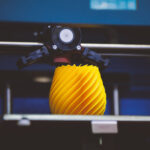
Let’s clear up the confusion this page used to create: there is no separate “Creality South Africa” factory or official branch that makes its own printers. Creality is a Shenzhen-based manufacturer (founded in 2014), and its printers reach South Africa the way most imported electronics do — through local 3D printing retailers and importers, and through global marketplaces that ship here. So the real question behind every “Creality South Africa” search is a practical one: what is the smartest way to buy one here, and what should you check before you pay?
The two ways a Creality printer reaches you
| Route | How it works | What you gain | What you give up |
|---|---|---|---|
| Local stock | An SA retailer or importer has the machine in the country already | Fast delivery, a local warranty claim, returns under SA consumer law | A smaller model range, and stock that comes and goes |
| Self-import | You order from an overseas store or marketplace and the parcel clears SARS customs to you | Access to new releases and models nobody stocks locally yet | Shipping time, customs charges on top of the price, and effectively no local warranty |
Neither route is wrong — but they suit different buyers, and most first-time buyers are better served by local stock.
Route 1: Buying from a local seller, safely
South Africa has an established 3D printing retail scene — specialist online stores, electronics retailers and marketplace sellers all carry Creality machines, and current models such as the K-series and the Ender-3 V3 line do appear through local specialists. Availability is model-dependent, though: a flagship may be listed by several sellers one month and out of stock the next. Before buying from any seller, work through this checklist:
- They are a real, traceable business. Look for a registered business name, a physical address or at least a working local phone number, and a proper tax invoice — legitimate SA retailers issue VAT invoices.
- The warranty is in writing. Ask who honours it, for how long, and whether a faulty machine is repaired locally, replaced, or shipped away. Get the answer in the product listing or in an email, not just verbally.
- Returns are spelled out. South Africa’s Consumer Protection Act gives you rights on defective goods bought from local suppliers — which is precisely the protection that evaporates on a grey import. A seller who states a clear returns policy is a good sign; one who hides behind “no returns on electronics” is not.
- The model and version are exact. Confirm the full model name — Creality reuses names across generations, and there are several very different “Ender 3” machines — and which variant and bundle you are getting.
Route 2: Importing one yourself
Sometimes the model you want simply is not in the country — a new release, an unusual variant, a resin machine. Self-importing through a global marketplace or an overseas store is a well-worn path, but budget for more than the sticker price:
- Customs duty may apply, calculated on the customs value (the item plus shipping and insurance). Duty rates vary by product category, so treat any overseas price as “before taxes” until proven otherwise.
- Import VAT is charged at South Africa’s standard 15%, and it is levied on the customs value plus any duty — so it compounds. SARS collects it before the parcel is released, and the old idea that small parcels slip through without VAT no longer holds.
- The courier charges a clearance/admin fee for processing your parcel through customs, on top of everything else.
- Time and risk are yours. Expect weeks rather than days, and understand that a machine that arrives damaged means an international return at your cost — if the seller accepts it at all.
Once duty, VAT and fees are added, an import that looked like a bargain often lands close to the local price — with none of the local protection. Import when the model is unavailable locally, not as a default way to save money.
Warranty: the part that matters most
A 3D printer is a machine full of moving, wearing and occasionally failing parts, which makes the warranty question more important here than the last bit of discount. Buy locally and a failed board, screen or power supply is a claim against your seller under SA consumer law. Buy overseas and Creality’s support will typically direct you back to the seller you bought from — an overseas store whose “warranty” may amount to sending small spare parts by post while you do the labour. Grey imports (machines brought in outside official channels and resold locally) sit in between: ask exactly who stands behind them first.
Power: plugs, voltage and outages
South African mains power is 230 V at 50 Hz, and wall sockets take Type M (the large three-pin) and the newer Type N plugs. Two practical points for printer buyers:
- Check the power supply before first switch-on. Many Creality power supplies are universal or have a 115/230 V selector switch on the side. If your imported machine has that switch set to 115 V and you plug it into a 230 V socket, you can damage the power supply instantly. This is one of the most common ways a new import dies on day one.
- Plan for interruptions. Print jobs run for hours, so a mid-print power cut matters. Most current Creality machines (the K-series and Ender-3 V3 line included) have power-loss recovery that resumes after an outage, though a visible seam on the part is common. A surge protector between the wall and the printer is cheap insurance for the electronics, whatever model you buy.
Spares, filament and help after you buy
Ownership in South Africa is easier than many buyers fear, because the Creality ecosystem uses standard, widely stocked parts. Local 3D printing suppliers carry the wear items — 0.4 mm nozzles, PTFE Bowden tube, build surfaces, belts and fans — and generic equivalents fit most Ender and CR machines. Filament is well supplied: local suppliers stock PLA, PETG and TPU, including South African filament brands alongside imported ones, so you are not dependent on overseas shipping for consumables. For troubleshooting, the local maker community is active in Facebook groups, forums and Discord servers for SA 3D printing, and help is easy to find because Ender and CR machines are so common here. Our step-by-step calibration guide covers the setup checks every new owner should run in the first week.
Which Creality models make sense in South Africa today
Availability shifts, but these are the machines worth shortlisting — compare current local listings against our Creality printer reviews and buying guide before deciding:
- First printer, tight budget: the Ender-3 V3 SE — automatic levelling and fast setup remove most of the beginner pain points of the older Enders.
- Mainstream all-rounder: the Ender-3 V3 or K1 SE — high-speed CoreXY-class performance in an open frame, with local availability through specialists.
- Enclosed and multi-colour: the K1C for abrasive and engineering filaments, and the K2 series (K2, K2 Pro, K2 Plus) if you want the CFS multi-colour system and a bigger, enclosed machine.
- Resin detail work: the HALOT range — but confirm local stock and resin supply first; resin machines live or die by consumable availability.
Frequently asked questions
Is there an official Creality store in South Africa?
Creality sells worldwide from Shenzhen and does not run a South African branch or factory that buyers deal with directly. In South Africa its printers are sold by independent local retailers and importers, and through global marketplaces. That is not a problem — but it means your warranty and returns sit with the seller you choose, which is why picking that seller carefully matters.
Is it cheaper to import a Creality printer than to buy locally?
Usually not by much, once the full landed cost is counted: international shipping, any customs duty, 15% import VAT charged on the value plus duty, and the courier’s clearance fee. The overseas sticker price excludes all of that. Importing makes sense when a model is not stocked locally; as a pure saving strategy it disappoints more often than it pays off.
Will a Creality printer bought overseas work on South African power?
Yes, with one check. South Africa uses 230 V / 50 Hz with Type M and Type N plugs. Many Creality power supplies are universal, but some have a 115/230 V selector switch — make sure it is set to 230 V before the first power-up, and use a plug adapter if the machine arrives with a foreign plug. A surge protector is a sensible extra.
Where do I get spare parts and filament in South Africa?
Local 3D printing suppliers stock the standard Creality wear parts — nozzles, PTFE tube, build surfaces, belts and fans — and filament is widely available locally in PLA, PETG and TPU, so neither spares nor consumables should force you into overseas orders. Keep your seller’s invoice safe either way: it is your proof of purchase for any warranty claim.
Hassan Khan

Hassan Khan is a leading voice when it comes to the innovative world of additive manufacturing. A mechanical engineer by training, Hassan quickly recognized the transformative potential of 3D printing, diving headfirst into the intricacies of printer design, filament research, and software optimization. At CrealityLovers.com, Hassan shares his profound knowledge, from insightful reviews and tutorials to forward-thinking op-eds that forecast the future of 3D printing. Hassan's commitment goes beyond the written word. Hassan Khan aims to empower every reader, from novices to industry experts, ensuring they make informed decisions in their 3D printing endeavors.