
Introduction to Creality Ender 3 Parts
The Creality Ender 3 is one of the most popular desktop 3D printers in the world, trusted by beginners, hobbyists, and professionals alike. One major reason for its success is the wide availability of creality ender 3 parts, which makes the printer highly customizable, easy to repair, and affordable to maintain.
Whether you are replacing worn-out components, fixing a sudden failure, or upgrading for better print quality, understanding each part of the Ender 3 is essential. This guide walks you through every major component in simple terms, helping you make confident decisions without technical confusion.
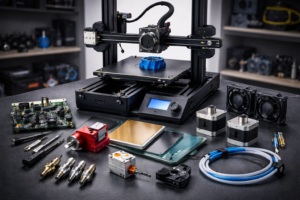
Understanding the Creality Ender 3 Ecosystem
Why the Ender 3 Is So Popular
The Ender 3 gained popularity because it offers:
- A strong aluminum frame
- Open-source compatibility
- Low entry cost
- Huge community support
Its modular design allows users to swap parts without replacing the entire machine.
Stock vs Aftermarket Components
Stock parts are designed for basic functionality and cost savings. Aftermarket parts often focus on:
- Higher durability
- Improved accuracy
- Better heat resistance
Both options work well depending on your needs and budget.
Core Mechanical Parts Explained
Frame and Aluminum Extrusions
The rigid aluminum frame keeps the printer stable during operation. A bent or loose frame can cause layer shifting and uneven prints.
Belts, Pulleys, and Motion System
Belts control movement on the X and Y axes. Proper tension is critical for accuracy.
X-Axis Components
- Timing belt
- Carriage plate
- V-slot wheels
Y-Axis Components
- Bed carriage
- Y-axis belt
- Stepper motor
Z-Axis Lead Screw and Motor
The lead screw raises and lowers the gantry. Regular lubrication reduces binding and noise.
Extruder and Filament System
Stock Plastic Extruder
The original plastic extruder works but may crack over time with frequent use.
Metal Extruder Upgrades
Metal extruders provide:
- Stronger filament grip
- Longer lifespan
- More consistent extrusion
Bowden Tube and Couplers
The PTFE tube guides filament smoothly. Worn couplers can cause under-extrusion and clogs.
Hotend and Nozzle Assembly
Hotend Components Breakdown
Heater Block and Thermistor
These regulate temperature. A faulty thermistor can cause heating errors.
Heat Break and Heat Sink
They prevent heat from traveling upward, avoiding filament jams.
Nozzle Types and Materials
Common nozzle materials include:
- Brass (standard use)
- Stainless steel (food-safe)
- Hardened steel (abrasive filaments)
Print Bed and Build Surface Parts
Heated Bed
The heated bed improves first-layer adhesion and reduces warping.
Glass, PEI, and Magnetic Beds
Each surface has benefits:
- Glass: smooth finish
- PEI: excellent adhesion
- Magnetic: easy print removal
Electronics and Control Components
Mainboard
Silent mainboards reduce motor noise and improve print quality.
Stepper Motors
These motors control movement. Failure often shows as skipped steps.
Power Supply Unit
A stable power supply ensures consistent heating and motor performance.
Cooling and Fan Systems
Hotend Cooling Fan
Keeps the heat sink cool and prevents clogs.
Part Cooling Fan
Improves print detail by cooling freshly extruded plastic.
Sensors, Switches, and Safety Parts
Endstop Switches
They tell the printer when an axis has reached its limit.
Bed Leveling Sensors
Auto bed leveling sensors save time and improve first-layer consistency.
Common Replacement vs Upgrade Parts
| Replacement Parts | Upgrade Parts |
|---|---|
| Nozzles | All-metal hotend |
| PTFE tubes | Silent mainboard |
| Belts | Metal extruder |
| Fans | Auto bed leveling sensor |
How to Choose the Right Parts
When selecting parts, consider:
- Compatibility with your Ender 3 model
- Print materials you use
- Your skill level
- Long-term reliability
Buying from reputable sellers or the official Creality store is always recommended. You can also explore trusted community resources like the official Creality website: https://www.creality.com
Maintenance Tips for Long-Term Performance
- Clean the nozzle regularly
- Check belt tension monthly
- Lubricate the Z-axis lead screw
- Inspect wiring for wear
- Keep firmware updated
Proper care reduces downtime and extends part life.
Frequently Asked Questions (FAQs)
1. How often should Ender 3 parts be replaced?
It depends on usage, but nozzles and PTFE tubes typically need replacement every few months.
2. Are metal extruders worth it?
Yes, they are more durable and provide better filament control.
3. Can I upgrade parts without technical skills?
Many upgrades are beginner-friendly with basic tools and guides.
4. Do aftermarket parts affect warranty?
They may, depending on the seller. Always check warranty terms.
5. What parts improve print quality the most?
Nozzles, bed surfaces, and cooling upgrades have the biggest impact.
6. Where can I buy reliable Ender 3 parts?
Official stores, trusted online retailers, and well-reviewed community vendors.
Conclusion
Understanding and maintaining creality ender 3 parts is the key to unlocking the full potential of your 3D printer. From mechanical components to electronics and upgrades, every part plays a role in print quality, reliability, and user experience. With the right knowledge and regular maintenance, your Ender 3 can deliver consistent, high-quality prints for years to come.
Hassan Khan

Hassan Khan is a leading voice when it comes to the innovative world of additive manufacturing. A mechanical engineer by training, Hassan quickly recognized the transformative potential of 3D printing, diving headfirst into the intricacies of printer design, filament research, and software optimization. At CrealityLovers.com, Hassan shares his profound knowledge, from insightful reviews and tutorials to forward-thinking op-eds that forecast the future of 3D printing. Hassan's commitment goes beyond the written word. Hassan Khan aims to empower every reader, from novices to industry experts, ensuring they make informed decisions in their 3D printing endeavors.